Why you shouldn't share your banking passwords with tracking apps
Rubén Pérez Aledo
Founder, TwentyOne
Picture this: You have just decided it is time to gain absolute control over your financial life. You download a sleek, highly-rated budgeting app that promises to categorize your spending, track your latte habits, and transform you into a financial wizard. The onboarding is flawless, the UI is gorgeous, and then, it asks for something that should immediately make your stomach drop:
"Please enter your bank username and password."
In the rush of our self-improvement high, millions of users unquestioningly type in their credentials, establishing a direct link between their private wealth and a third-party server. But here is the cold, hard reality: sharing your actual banking passwords with third-party tracking apps is a catastrophic security risk that actively compromises your financial sovereignty.
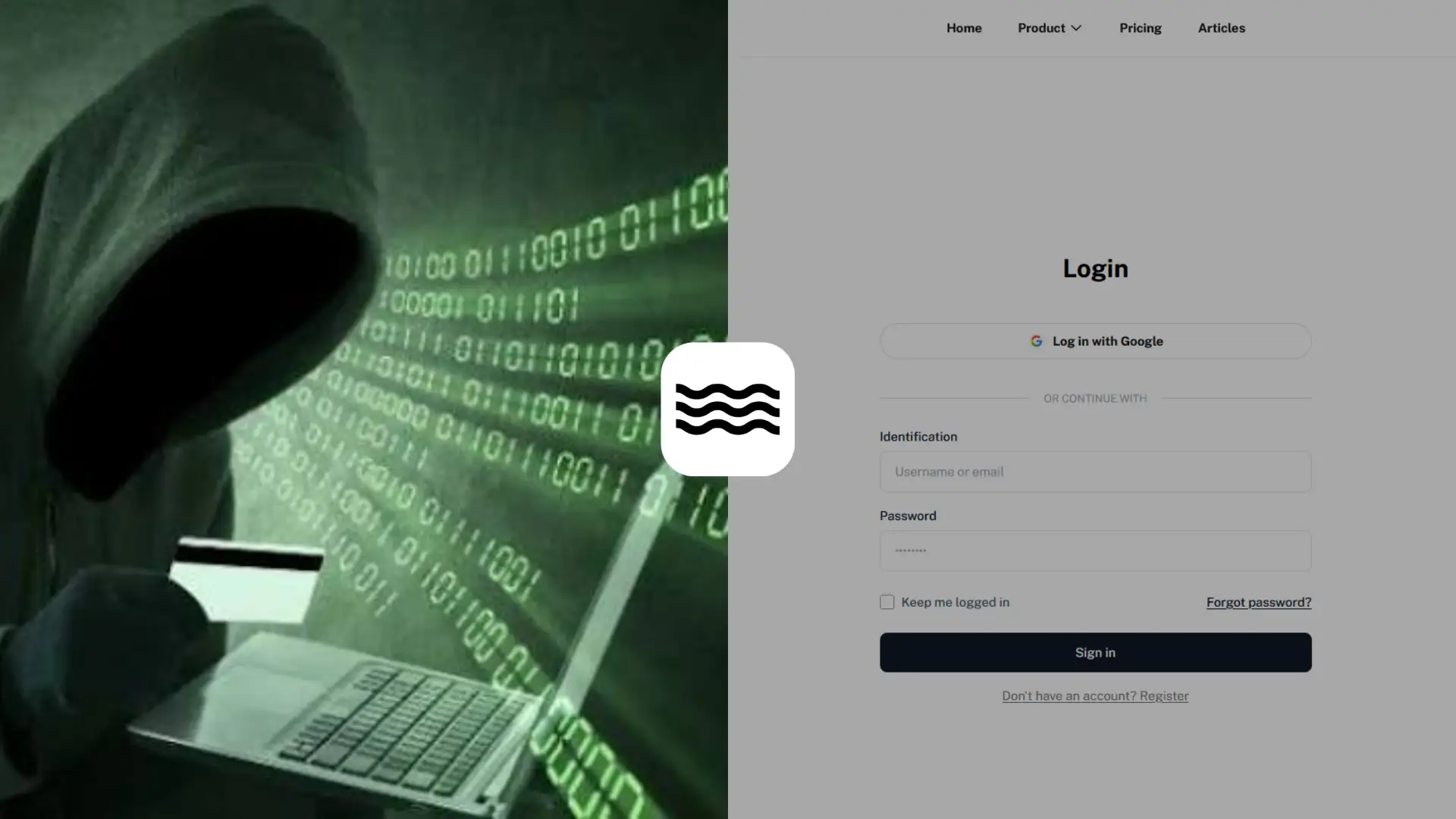
1. The Dirty Little Secret: Screen Scraping
To understand why sharing your password is a critical vulnerability, you must understand the underlying mechanics of how these apps fetch your data. If an application lacks a direct, official API partnership with your bank, it relies on a controversial, brute-force method known as screen scraping.
- Digital Impersonation: When you hand over your login details, you are not simply "linking" an account. You are granting a piece of software the permission to impersonate you. An automated bot navigates to your bank's portal, executes a
login()request with your exact credentials, and digitally "reads" the screen to scrape your balance. - The "Admin Access" Problem: The budgeting app might claim it only wants to parse your transaction history. However, with your raw login credentials, that automated bot possesses the technical capacity to do anything you can do. It can initiate transfers, alter security settings, and access highly sensitive personal documentation.
- The Honeypot Effect: Financial aggregators store millions of banking credentials on their servers. To a malicious actor, this is the ultimate honeypot. A hacker does not need to breach your highly secure bank; they just need to breach the third-party app holding your password in plaintext or reversible encryption.
2. Voiding Your Institutional Protection
This is the most overlooked consequence of the convenience economy. Have you ever scrutinized your bank’s Terms of Service? Nestled within the legal jargon is an iron-clad directive: Never share your password with any third party.
By willingly inputting your credentials into a budget tracker, you have technically breached your security contract with your financial institution. If a data breach occurs even if it is entirely the fault of the third-party app your bank has full legal grounds to deny you fraud protection. If your liquidity vanishes, they can point to the ledger and state that you voluntarily surrendered the keys.
"True financial control isn't just about knowing where your money goes; it is about maintaining absolute architectural sovereignty over who has the power to access it."
Why expose your core capital to systemic external risks just to see a colorful pie chart of your monthly grocery expenses?
3. The Secure Paradigm: Open Banking and Non-Custodial Tracking
Does this mean you must revert to archaic ledger books and physical calculators? Absolutely not. The modern investor must demand infrastructure that leverages Open Banking protocols or, even better, entirely non-custodial environments.
When an application utilizes a secure Open Banking API (like OAuth), it never sees your password. It redirects you to your bank, where you log in securely and generate a read-only, time-limited "token."
However, for those managing complex, multi-asset portfolios, the safest route is a non-custodial wealth management platform like TwentyOne. We fundamentally reject the premise that you must surrender your privacy to gain analytical insight.
- Zero Counterparty Data Risk: Because TwentyOne operates on a non-custodial architecture, we never ask for your bank credentials. You maintain absolute custody of your connection vectors.
- Asymmetric Security: You manually input your data or utilize secure, anonymous CSV parsing. Our algorithmic engine then performs the heavy mathematical lifting calculating drawdowns, mapping asset correlations, and running systemic risk audits without ever possessing a backdoor to your actual capital.
- Unhackable Vaults: A hacker cannot steal what we do not hold. Your bank passwords remain exactly where they belong: securely locked in your mind or a local, encrypted password manager.
Time to Lock the Gates
We operate in an era where data is commoditized and cyber vulnerabilities are compounding daily. Trading the structural security of your primary wealth centers for the minor convenience of automated expense categorization is a remarkably poor risk-adjusted decision.
Revoke access from apps utilizing screen scraping, update your core passwords, and transition to professional-grade, non-custodial tracking infrastructure. Your peace of mind is worth the upgrade.